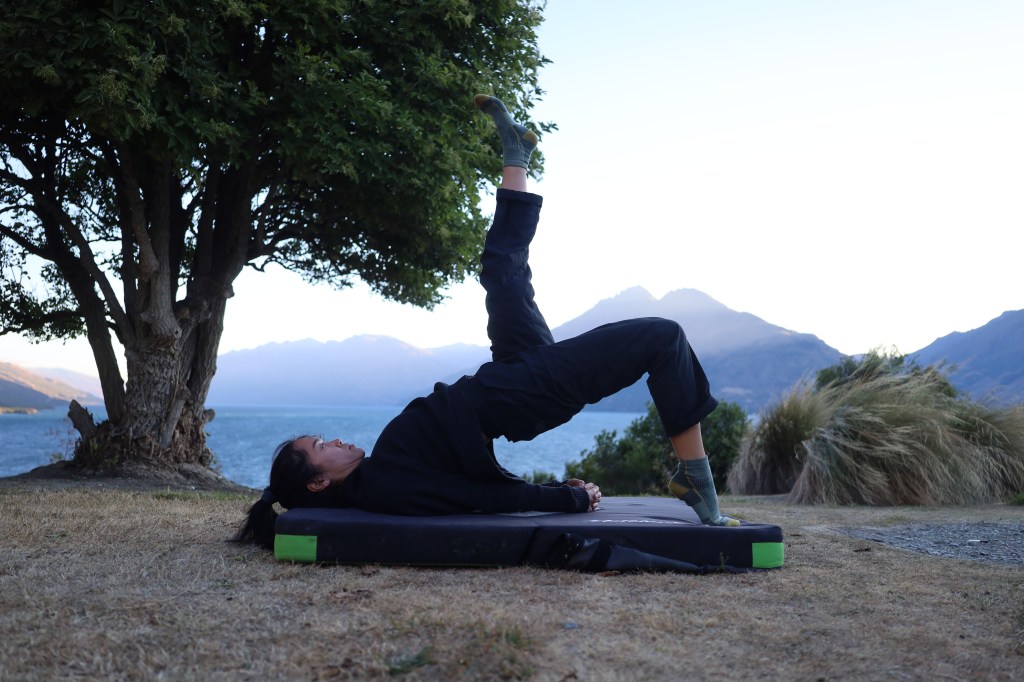
Bridge Pose is a backbend that offers multiple variations and can be adjusted according to your practice. The Sanskrit name, Setu Bandha Sarvangasana, roughly translates to the bridge that bonds all limbs.
This pose is often associated with the concept of “bridging” the body and mind, creating a link between the earth and the sky. It is said to represent the idea of creating a strong, supportive structure that connects different parts of the body, much like a physical bridge.
Benefits & Muscle Focus
- Strengthens the back, glutes, and legs, promoting spinal health and posture.
- Stretches the chest, spine, and hip flexors, helping to open the chest and relieve tightness from sitting.
- Improves circulation, especially in the lower body, by engaging muscles and lifting the pelvis.
Alignment
- Start laying on your back with your knees bent and feet planted approximately hip or shoulder distance apart. Ensure the knees are stacked above the ankles. Extend your arms down by your sides, palms facing down.
- Press firmly into the feet and activate the glutes, hamstrings, and quadriceps. Lift the hips.
- Press into the palms and forearms to maintain integrity in the upper body. Keep the gaze upwards towards the sky and avoid turning the head side to side to protect the neck.
- When you are ready to exit the pose, tuck the chin in towards the chest and slowly lower the spine back onto the mat.
Modifications
- For a restorative option, slide a block underneath the hips for a supported variation.
- For strengthening, you can try lifting up onto your toes or extending one leg up towards the sky.
- For a deeper heart and shoulder opener, interlace hands underneath your back and press the forearms firmly into the mat.
Contraindications
- Neck or back injuries: avoid if you have severe neck or spine conditions, as the pose may strain these areas.
- Shoulder injuries: if you have shoulder pain or injury, be cautious about lifting your torso fully.
- Glaucoma or eye issues: the pose may increase intraocular pressure, so it’s best avoided if you have eye conditions like glaucoma.
Practice
- Flow 10: Morning Yoga for Low Back & Hips →
- Restore 20: Low Back & Hips →
- Power 40: Spinal-Focused Flow →


 The Power Yoga Podcast