
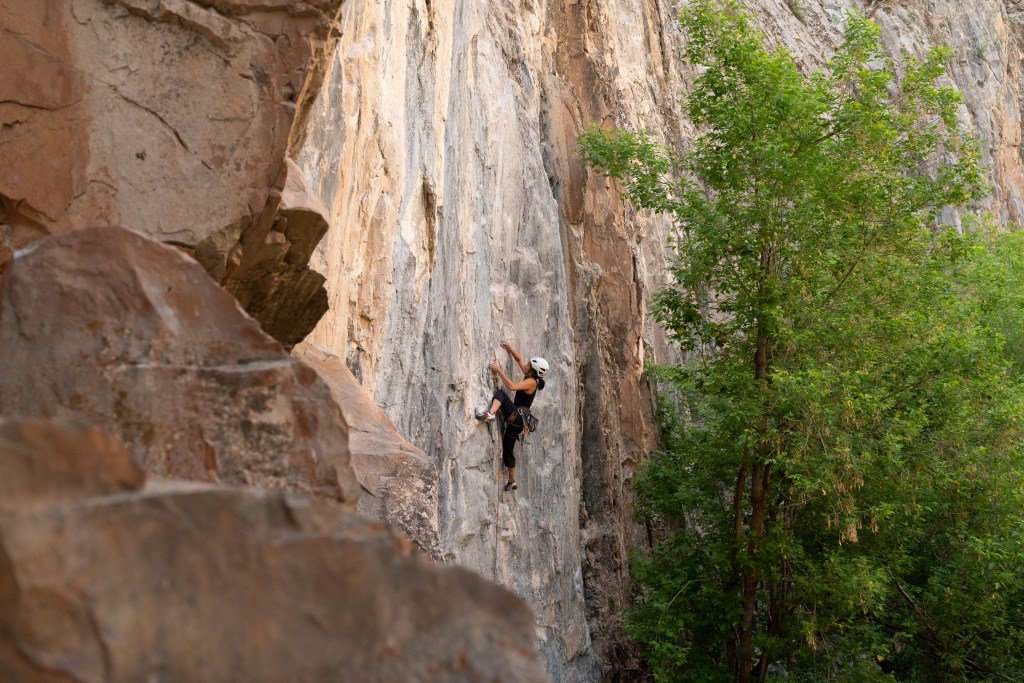
Hip flexibility is one of the most common reasons why a lot of climbers come to my yoga class. Hip mobility and flexibility are vital, not only for moving up the wall, but for our general everyday health and well-being. Maintaining healthy hips is important not only for moving efficiently up the wall, but for injury prevention too. Making it a daily practice to move our body and our joints in a safe manner will contribute long term to our overall longevity, independence, and ability to continue enjoying the things we are passionate about!
Below are 5 beginner-friendly and wrist-friendly hip stretches you can do anywhere to start working towards enhancing your hip flexibility, on and off the wall. I would recommend doing these passive poses after a session or later in the afternoon/evening so that your muscles have been warmed up from the movement in your day. These poses are fairly straight-forward and are all done either laying on the back or from seated, which make them great options for those with wrist injuries! Although these are beginner-friendly, they are still important for all levels and are poses I continue to do in my regular practice.
I hope that you find these five poses approachable and relevant to your needs. And most importantly, I hope this helps to jump-start your regular practice of maintaining the health of this very complex joint that enables us to move and function in all sorts of ways!
1. Half Wind Relieving Pose (Ardha Pavanamuktasana)

Half Wind Relieving Pose can help improve flexibility, mobility, and muscular release in key areas such as the hips, lower back, and legs. This pose is great for enhancing the range of motion in the hip, as well as contribute to flexibility in the hamstrings and quadriceps. It also stretches the hip flexors (iliopsoas and rectus femoris), which are crucial when lifting the legs or rotating the hips to find optimal positions on the wall, particularly with high steps. To do this pose safely, your core also engages to stabilize the pelvis and prevent lower back arching — this can be helpful with maintaining body tension when placing your foot on precise footholds.
Learn more about Half Wind Relieving Pose in this blog post.
2. Half Happy Baby (Ardha Ananda Balasana)
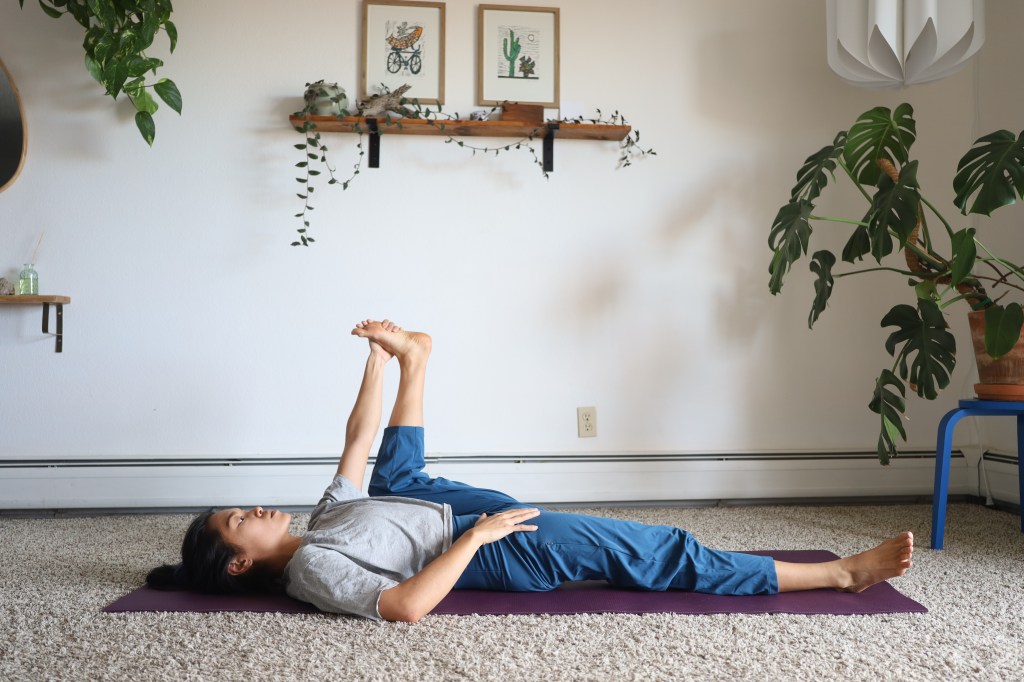
Half Happy Baby Pose helps open the hip flexors and adductors (inner thigh muscles). This pose also targets the hamstrings and groin area of the bent leg. A lot of movements in climbing require keeping one leg extended on a low foothold to push and stabilize while the other foot is placed onto a higher foothold. Stretching and lengthening these muscles allows for more fluid movement, better positioning of the hips during climbing, and offers a greater ease in lifting the legs to reach high footholds. This pose also encourages the external rotation of the hip in the bent leg, which is particularly useful for climbers who need to rotate their hips to face the wall or place their foot for a high heel hook.
3. Figure 4
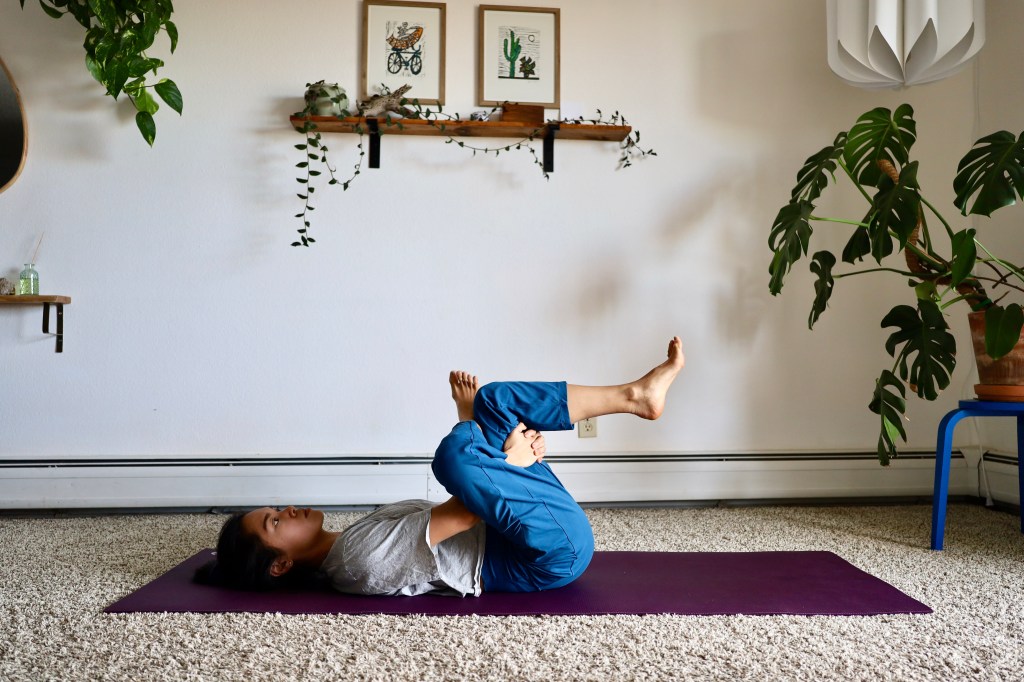
Figure 4 Stretch targets several key muscle groups involved in climbing, including the hip flexors, glutes, and outer hips, all of which are crucial for efficient and powerful climbing movements. This pose helps to increase mobility and flexibility of the glutes and the piriformis, a small muscle in the hip that helps with external rotation and stabilization of the hip joint. Regular practice of Figure 4 can enhance the range of motion in the hips, which reduces the likelihood of straining the hip muscles during climbing. Hip mobility can help movements feel more fluid and reduce the risk of tightness or discomfort in the hips, which can affect climbing efficiency.
4. Traction Twist
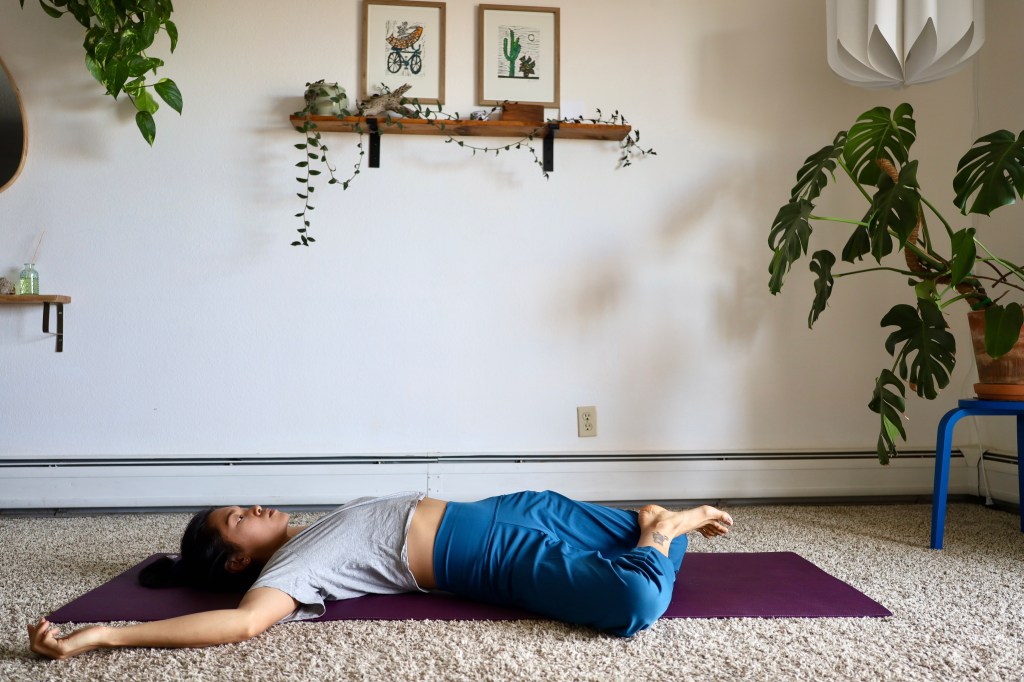
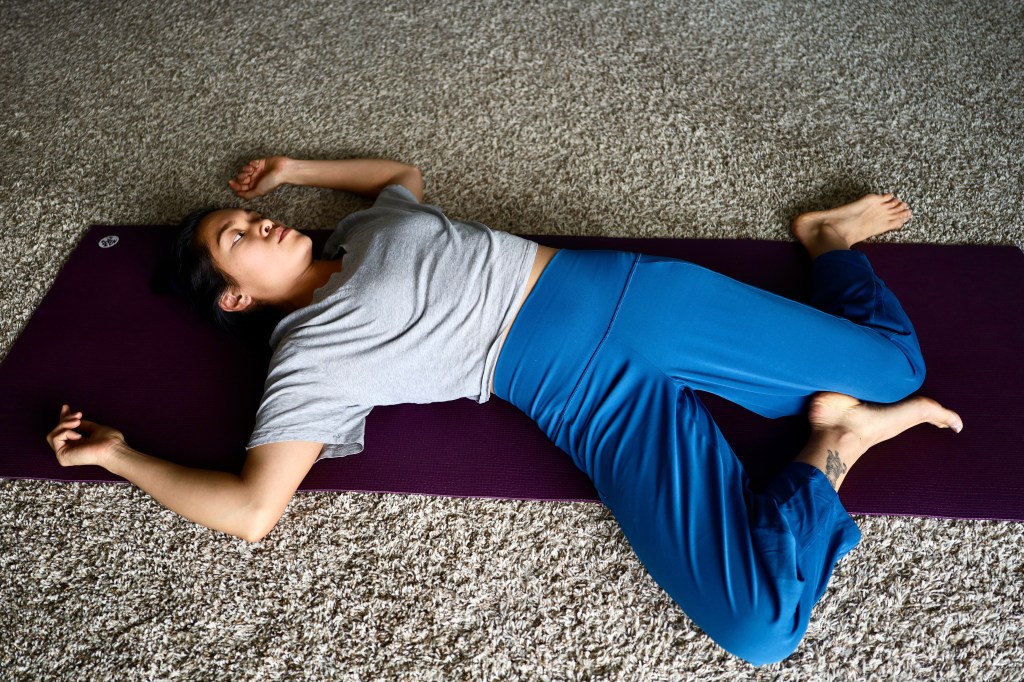
The Traction Twist is a pose that focuses on the internal rotation of the hip. This pose is particularity great for improving flexibility and mobility for drop-knees, a common technique for extending reach, improving stability, and maintaining efficiency on the wall. This pose primarily focuses on the internal rotator muscles such as the gluteus medius, tensor fasciae latae (TFL), and adductors. When performing internal rotation stretches, the deep external rotators of the hip are also stretched as they resist internal rotation. These include muscles such as the quadratus femoris and piriforis.
Regularly practicing the Traction Twist can help maintain and enhance mobility for internal hip rotations. Maintaining this range of motion can help with fluidity of movement while climbing as well as prevent injury. Below is a closer view of this pose, notice how it resembles the shape of a drop-knee on the wall.
5. Bound Angle Pose (Baddha Konasana)

Bound Angle Pose, or sometimes referred to as Seated Butterfly Stretch, is a hip opener that primarily stretches the adductors (inner thighs). This is a great pose to help with keeping a climber’s hips close to the wall, especially for frogging and high-stepping. Tight inner thighs can limit the range of motion needed for these movements and can even cause injury if a climber is forcing their body into a position they do not normally move in. You can practice this pose and different variations of it, such as laying on the back, to help you keep your hips close to the wall!
Practice these poses with a 10 minute follow-along yoga video:


 The Power Yoga Podcast